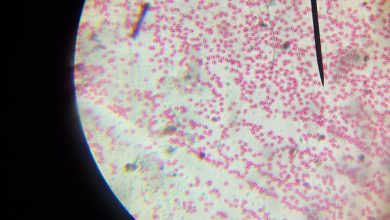
A research team in South Korea has found that an engineered protein can cut the harmful deposits linked to Alzheimer’s disease in the brains of mice by about half. The team, led by Professor Mi Hee Lim at the Korea Advanced Institute of Science and Technology, reported on 5 November 2026 that a protein involved in gene regulation can suppress the clumping of amyloid-beta, the peptide that builds up in the brains of people with Alzheimer’s. The findings were published in the journal Advanced Science. The researchers used a segment of a zinc finger protein, called ZF2-4, which binds directly to the parts of amyloid-beta involved in its aggregation. In experiments, it stopped long, toxic fibrils from forming and broke down fibrils that had already formed into shorter, less toxic fragments.
What the Evidence Shows
To get the protein into the brain, the team attached a short peptide that helps it cross the blood-brain barrier, creating a variant named ZF2-4-P9. When given to a mouse model of Alzheimer’s disease, amyloid-beta deposits in the cerebral cortex and the hippocampus each fell by about 53 percent compared with untreated mice, and the treated mice showed improved memory recognition. The treatment also calmed overactive microglia, the brain’s immune cells, reducing their activation by about 29 percent in the cortex and about 50 percent in the hippocampus. The work was done in collaboration with teams at Jeonbuk National University and several Korean research institutes. The researchers stress that this is early work in animals, but it opens a possible route toward new Alzheimer’s treatments. The team also showed that the protein reduced the toxicity of aggregates that had already formed, rather than only preventing new ones from appearing. Reporting and analysis from sources such as National Science Foundation track the same developments, and specialists following the engineered zinc finger protein say the direction is now consistent across independent lines of evidence.
The Wider Context
The wider context is a research landscape in which replication and open data now decide reputations. Findings connected to the engineered zinc finger protein are being checked by independent groups with shared datasets, and the teams involved publish their methods in full so rivals can test every step. That discipline is slower than a headline cycle, but it is why results in this area increasingly survive first contact with scrutiny.
What Happens Next
What happens next in the story of the engineered zinc finger protein will be decided by follow-up work already under way: larger samples, longer observation and instruments that have not yet come online. The researchers involved are unusually united on one point, that the current results justify the next investment of time and money. Readers will not have to wait long for the first tests of that claim. You can follow related developments in our coverage of science.
There is a practical lesson in all of this for readers deciding what to do today. Start with the verified facts, be wary of anyone promising certainty, and prefer reversible steps while the evidence is still developing. Circumstances differ by country, income and personal situation, so general guidance should always be weighed against your own context before you act on it in any significant or lasting way.